Biblical Governance: Why Self-Government Comes Before Leadership


When most people hear the word governance, they think about presidents, pastors, CEOs, parents, laws, institutions, and people in positions of authority. We usually look outward first and ask who is leading, who is making the decisions, and whether those decisions are right. Biblical Governance begins with a more personal question: Who is actually governing me?
Before I ask how the world, church, family, business, or nation should be governed, I first must ask whether I am allowing God to govern me.
Proverbs 16:32 says, “He that is slow to anger is better than the mighty; and he that ruleth his spirit than he that taketh a city.”
That comparison is significant. Scripture places the ability to rule your own spirit above the ability to conquer something outside yourself.
Why?
Leadership that is not governed internally will eventually reveal what is actually in control.

Biblical Governance Begins With God
Biblical Governance is not simply self-discipline. It does not begin with stronger willpower or becoming better at controlling ourselves. It begins with the authority of God.
Psalm 103:19 declares, “The LORD hath prepared his throne in the heavens; and his kingdom ruleth over all.”
God is the Source. His Word establishes order, truth, and the standard by which our lives are governed. Any authority we carry is received, limited, and accountable to Him.
That creates a clear progression:
God governs. His Word establishes order. We come under that order. We learn to govern ourselves under His authority. Then we are prepared to carry responsibility involving others.
This is what makes Biblical Governance different from secular ideas of self-mastery. The goal is not to become so disciplined that I no longer need God. The goal is to become increasingly surrendered to God so that His truth governs how I think, choose, respond, and lead.
This is where leadership becomes personal.
A person may manage employees and still be unable to govern anger. Someone may handle large amounts of money and still be governed by appetite. A person may hold influence and still be controlled by pride, insecurity, fear, or the need for approval.
Authority does not automatically create character. It often gives what is already inside us a larger stage on which to appear.
That is why self-government comes first.

What Is Governing the Inside?
Proverbs 16:32 forces us to consider internal government.
What is ruling my speech when I am angry? What is ruling my decisions when I feel pressure? What governs my use of money, time, attention, sexuality, appetite, emotions, and influence?
Self-government under God does not mean becoming emotionless or pretending temptation does not exist. It means that emotion, appetite, impulse, and personal preference do not become the final authority over my conduct.
The question becomes: What has the final word?
Psalm 119:11 gives us an important answer: “Thy word have I hid in mine heart, that I might not sin against thee.”
God's Word cannot remain something we occasionally consult when we need advice. It must become internal government.
The Word is received, internalized, and allowed to confront us before our impulses become actions. It brings conviction. Conviction calls for surrender. Surrender produces changed behavior when it becomes practiced obedience.
This is where Biblical Governance becomes more than information.
The Word does not simply tell me what is true. It exposes what has been governing me instead.
Sometimes that is emotion. Sometimes tradition. Sometimes culture. Sometimes convenience. Sometimes it is simply what seems reasonable to us.
Proverbs 14:12 warns, “There is a way which seemeth right unto a man, but the end thereof are the ways of death.”
Something seeming right is not the same as something being right before God.
That distinction matters because we are very capable of creating explanations for what we already want. We can call pride confidence. We can call control leadership. We can call impatience urgency. We can call fear wisdom. We can call convenience peace.
But changing the language does not change what is governing the decision.
Biblical Governance requires us to bring those decisions back under the authority of God's Word.

Christ Shows Us What Surrendered Authority Looks Like
Christian leadership cannot stop at self-control. Christ is our model.
In Luke 22:42, Jesus says, “Nevertheless not my will, but thine, be done.”
Those words reveal something essential about authority.
Christ possessed authority, yet He did not operate independently of the Father's will. His authority existed within surrender.
That gives us a different understanding of leadership.
Biblical leadership is not unlimited authority to do whatever I want. It's having enough surrender to remain obedient to God while carrying responsibility.
That applies to the pulpit, the boardroom, the household, the nonprofit, the business, and the community.
Leadership does not remove the need for submission. It increases the responsibility to remain surrendered. The more responsibility I carry, the more important it becomes to ask what is governing me.
Is it ambition or obedience? Ego or stewardship? Approval or truth? Personal preference or the Word of God?
Before Scripture gives me a reason to examine how everybody else is governing, it gives me a reason to examine what is governing me.

Start With One Area
Biblical Governance has to move from conviction to practice.
That does not mean trying to repair every area of your life at once. Start with one.
Identify one area that is difficult to govern according to God's Word. Find what Scripture actually says about it. Then ask what has been governing that area instead.
Is it fear? Anger? Pride? Comfort? Appetite? Approval? Convenience? Personal reasoning?
Bring that area honestly before God. Yield it to Him. Then begin practicing what His Word requires.
That is where governance becomes visible.
Proverbs 16:32 begins to look different when we understand it this way. The person who rules his spirit is not simply someone with extraordinary self-control. He is someone whose inner life is being brought into order under a higher authority.
Biblical Governance begins with God, but its first visible evidence in my life is whether I am willing to come under His government myself.
Before I lead a family, ministry, organization, business, community, or anyone else, I must continually learn to govern myself under God.
So the question is not only, “Am I a leader?”
The deeper question is:
“What is governing the leader?”
And perhaps the best place to begin is with one honest question:
What area of your life is God asking you to bring under His government?
Continue the Study
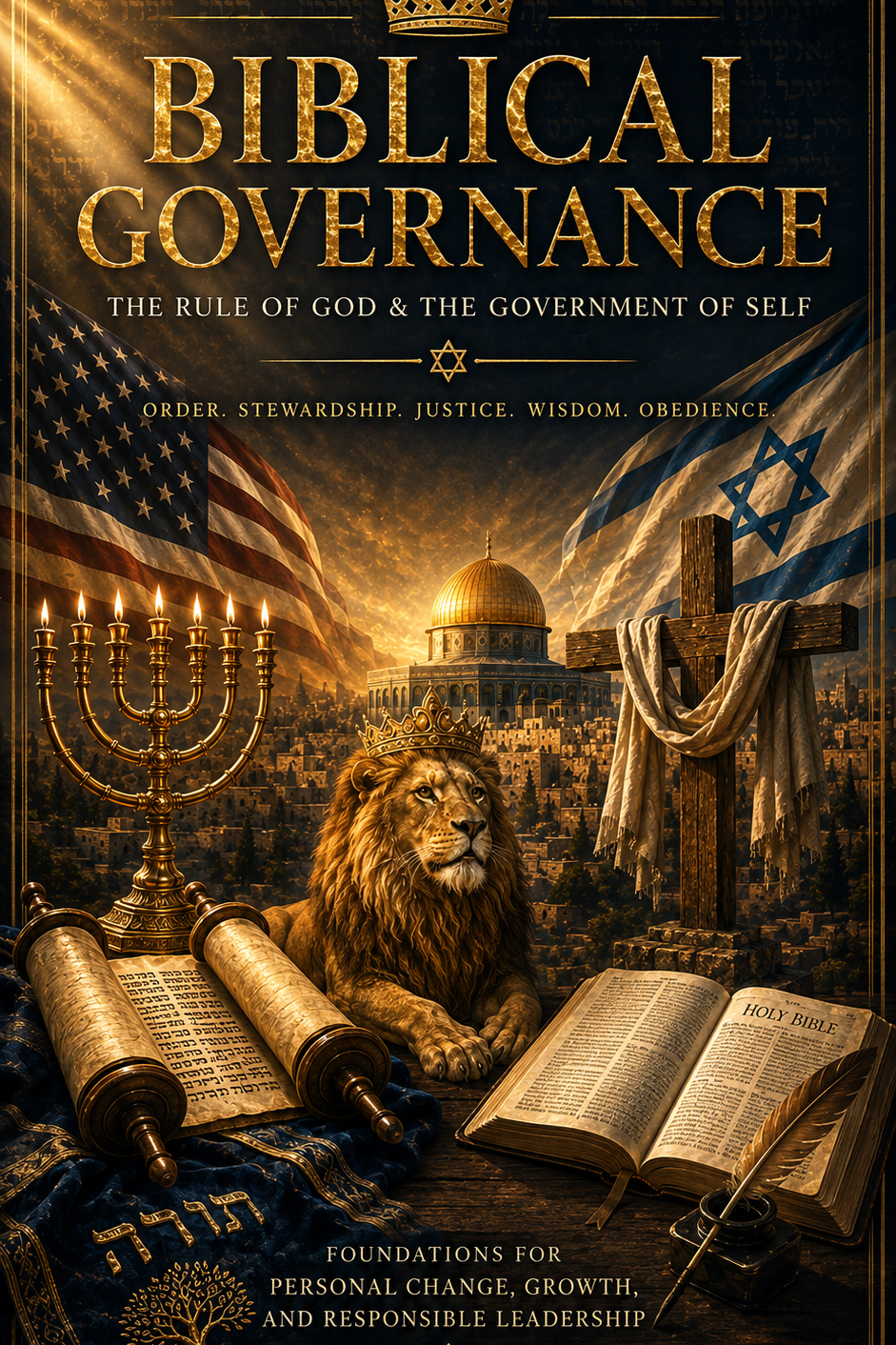
If this article has caused you to think more deeply about God's authority, self-government, stewardship, and responsible leadership, continue with the free resource:
This resource provides a structured way to examine how God's rule shapes personal government, stewardship, character, responsibility, and leadership.
If you are ready to go deeper, begin with the area God is already bringing to your attention and use the resource for reflection, biblical examination, and practical application.
Comments