Thinking Three Moves Ahead: How Strategy Thinking Games Can Strengthen Business Leadership

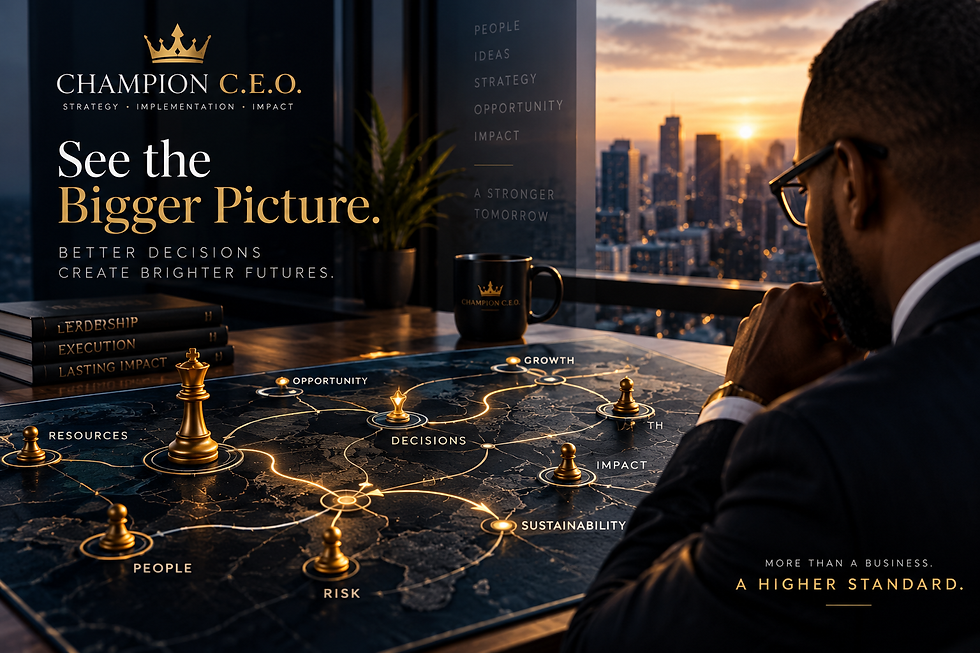
Strategy is more than having a plan. It is understanding where you are, where you want to go, what resources you have available, and how the decisions you make can affect what happens next. Strategic Thinking is the discipline of applying that understanding as conditions change. Strategy Games provide a practical way to experience both.
Consider a chessboard. Before the first move, every piece has a position, purpose, and potential. Once a player makes a move, the board changes. New opportunities appear. Other options disappear. Resources become more valuable or more vulnerable. The other player responds, and suddenly the next decision must be made within a different set of conditions.
That is what makes chess a useful example of Strategy and Strategic Thinking. The objective provides direction, but reaching that objective requires continuously reading the board, anticipating possibilities, making decisions, observing responses, and adjusting. Business leadership requires the same kind of thinking.
Strategy Is More Than the Next Move
Entrepreneurs, nonprofit leaders, founders, and community builders make decisions every day about people, money, marketing, partnerships, programs, services, technology, and growth.
It can be easy to evaluate those decisions individually: Should we launch this? Should we spend this? Should we pursue this partnership? Should we expand this program?
Strategic Thinking asks us to go further.
If we make this decision, what changes?
What resources are we committing?
What opportunities could become available?
What options could disappear?
How might customers, competitors, partners, or the market respond?
What position will we be in after the decision is made?
This is the difference between simply making a move and understanding the role that move plays within a larger Strategy.
On a chessboard, a move that looks good by itself may create a weakness somewhere else. A player may gain something immediately while sacrificing a stronger position later. The same can happen in business when an attractive opportunity consumes resources that were needed for a more important objective.
Strategy requires leaders to see individual decisions as connected parts of a larger direction.
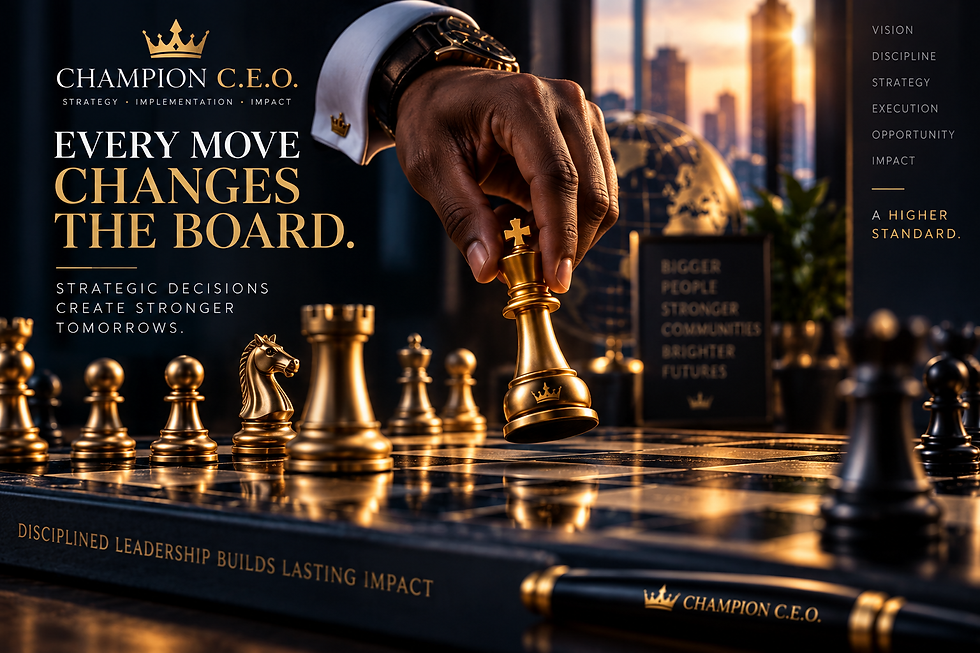
Strategic Thinking Happens as the Board Changes
No matter how carefully a leader plans, the environment will not remain still.
Markets change. Customers respond. Competitors act. Costs move. Technology develops. Partnerships create new possibilities. Some assumptions prove correct, while others do not. That does not mean the Strategy failed. It means Strategic Thinking must continue.
A Strategy Game demonstrates this naturally. You begin with an objective and an approach, but you cannot decide every move in advance because you do not control everything that happens on the board. Each move creates a response, and each response gives you new information. Business works in much the same way.
A leader launches a campaign and receives market feedback. An organization introduces a program and measures participation. A business makes an offer and observes how customers respond. A team implements a process and discovers whether it improves performance. Each action changes the board.
The response creates information.
The information informs the next decision.
That is why Strategic Thinking requires more than planning. It requires observation, analysis, decision-making, measurement, and adaptation.

Thinking Three Moves Ahead Can Strengthen Business Leadership
Thinking three moves ahead does not mean predicting exactly what will happen.
It means recognizing that the decision in front of you is connected to decisions you have not made yet.
A strong leader considers the immediate move while also considering its future possibilities.
If conditions change, will there still be options?
If the market responds differently than expected, what will the response reveal?
If resources are committed here, what will remain available for the next opportunity?
Strategy Games allow us to practice this way of thinking in a visible environment.
We can see the board. We can see the resources. We can make a decision, observe the response, evaluate the result, and determine what should happen next.
The business environment is more complex, but the underlying discipline remains valuable.
Strategy establishes the direction.
Strategic Thinking keeps the leader engaged with the changing conditions surrounding that direction. This strengthens business leadership exponentially.
Each decision becomes part of a continuing path:
Understand the position. Consider the possibilities. Make the move. Observe the response. Learn from the result. Determine the next move.
That is the larger lesson behind the chessboard.
The purpose is not to predict every move before it happens. It is to understand that every move helps create the conditions in which the next decision will have to be made.
When leaders understand that, Strategy becomes more than a document or plan created at the beginning of an initiative. It becomes connected to how they think, how they allocate resources, how they interpret information, how they respond to change, and how they continue moving toward an objective.
The next time you look at a chessboard, look beyond the piece being moved.
Look at what changed because it moved.
Look at the opportunities that opened.
Look at the options that closed.
Look at the response it created.
And look at the position that now exists.
That is the purpose of Thinking Three Moves Ahead: understanding Strategy well enough to make a move, and developing the Strategic Thinking necessary to understand what that move makes possible next.
Comments